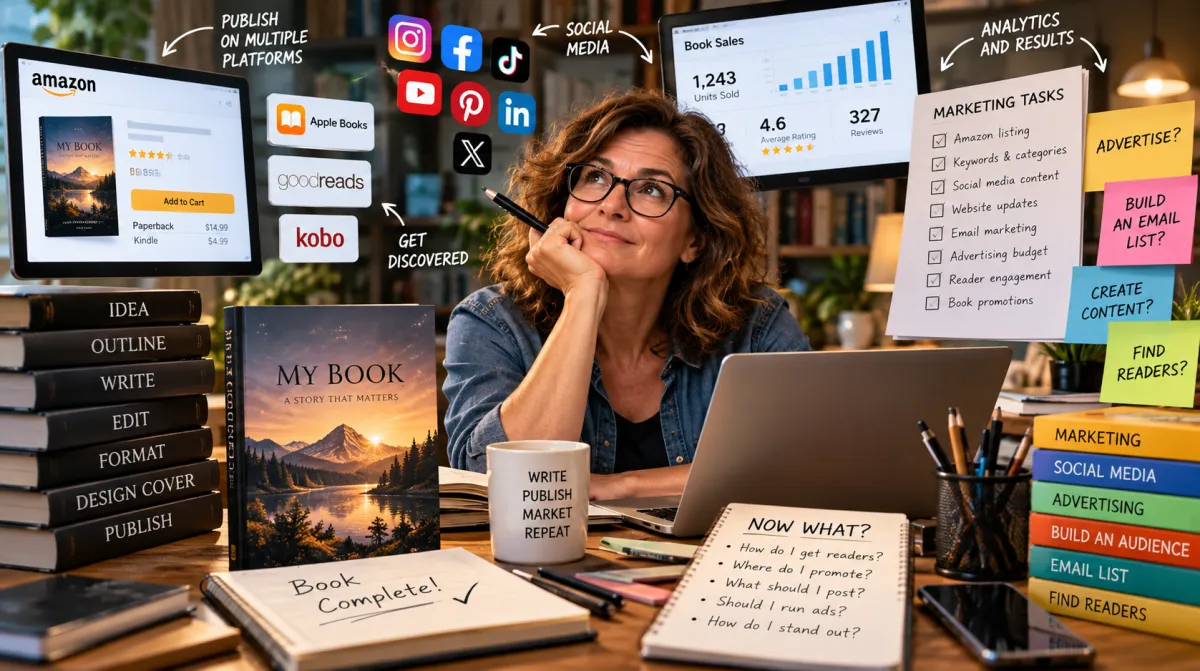
Writing the Book Was the Easy Part: The Marketing Reality of Being an Indie Author

You have an idea.
Maybe it's a story that will entertain people.
Maybe it's knowledge you've gained through years of experience.
Maybe it's something you believe can educate people, help them solve a problem or simply give them a few hours of escape.
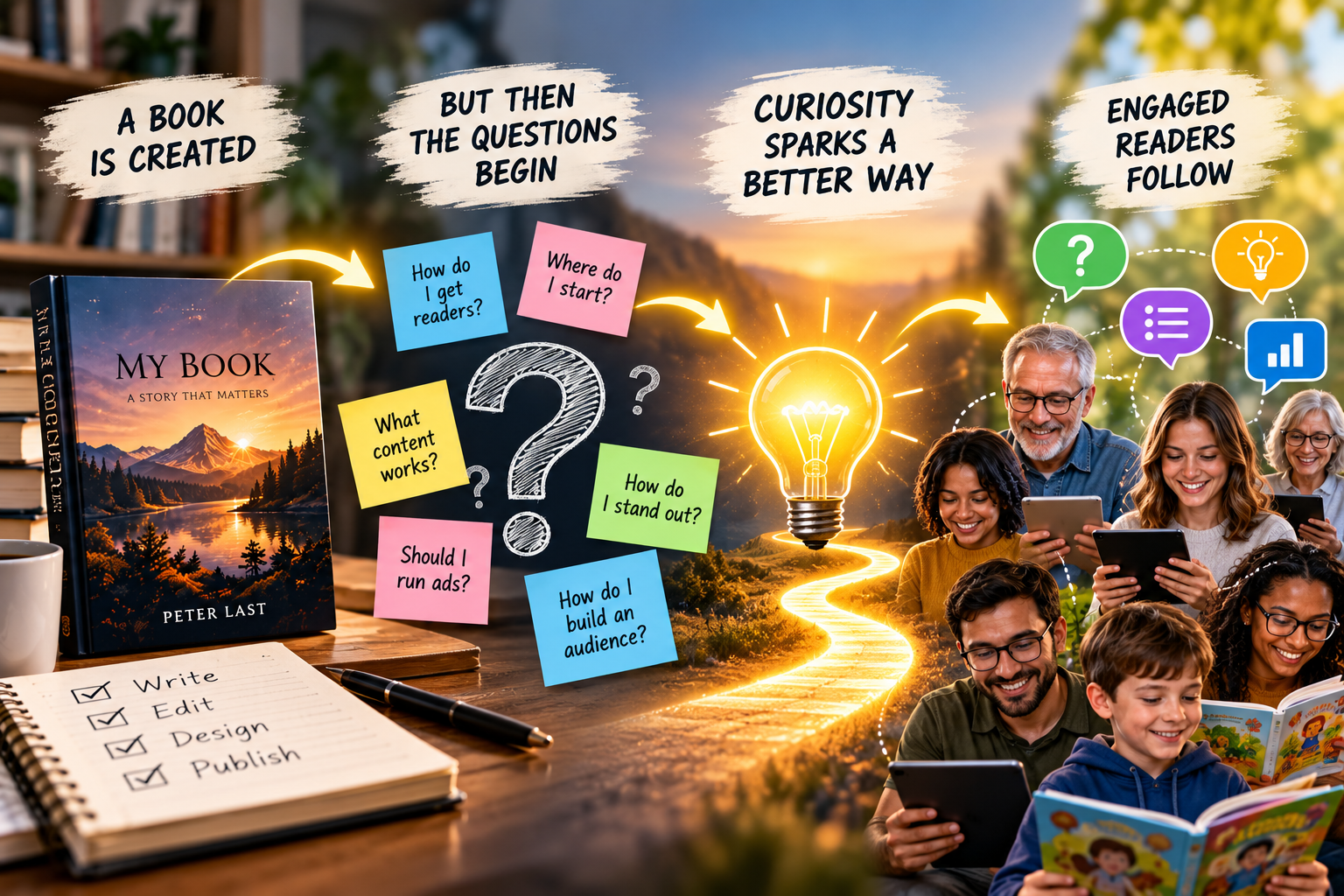
So you write a book.
You edit it. Format it. Design the cover. Upload it.
Then comes the question many indie authors aren't prepared for:
How do I get people to actually find it?
That's when you discover something important.
Writing a book and marketing a book require two very different skill sets.
Publishing Has Never Been More Accessible
Independent authors have opportunities today that previous generations of writers could only imagine.
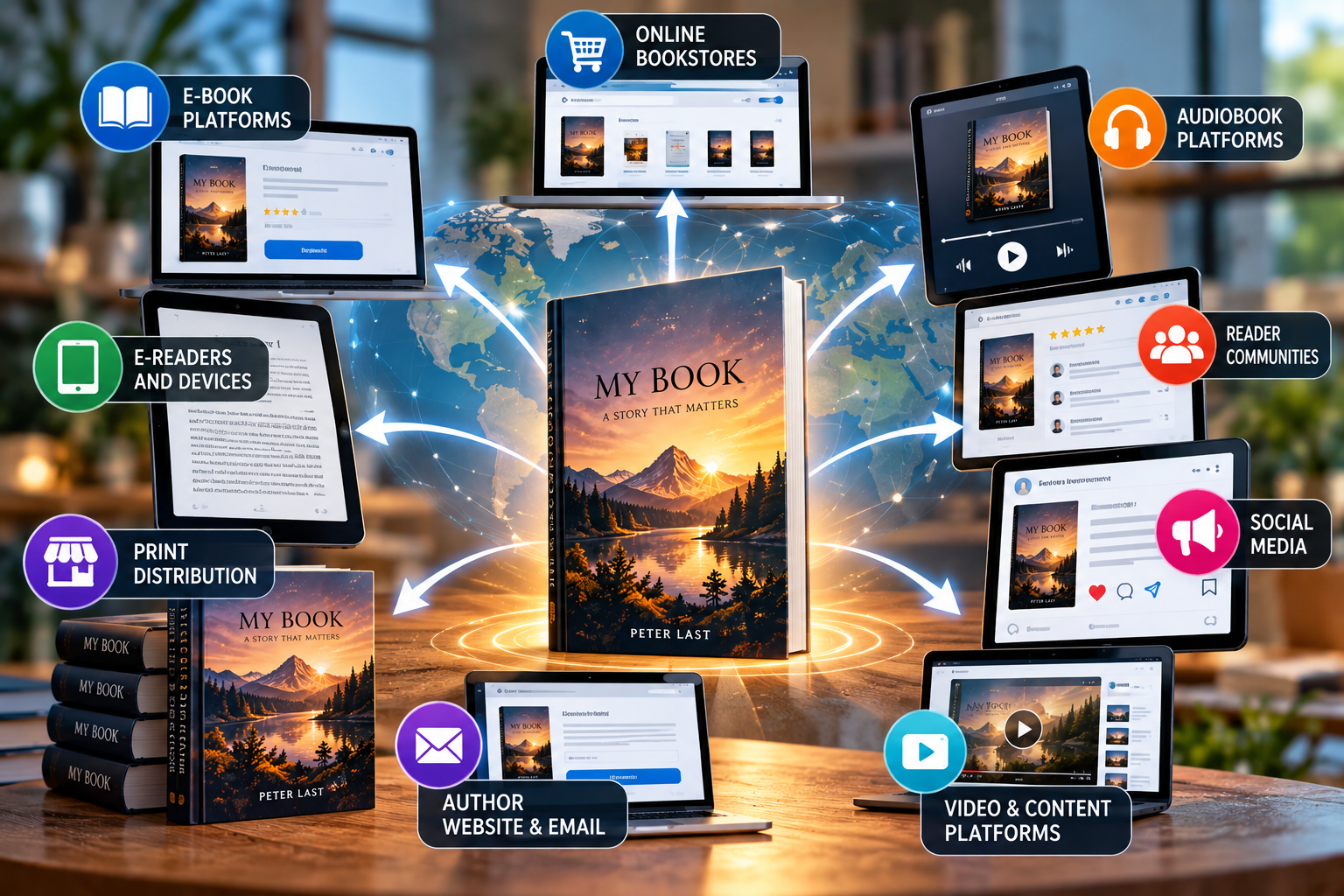
Amazon KDP allows an author to publish a book and make it available around the world.
There are also Apple Books, Kobo and other publishing and distribution platforms. Goodreads can help readers discover books, track what they're reading and connect around them.
The traditional gatekeepers no longer control every path to publication.
That's the good news.
The challenging part?
Making your book available doesn't mean people will discover it.
Your book can have an Amazon listing.
It can appear on multiple platforms.
You can build an author website.
You can create accounts on Instagram, TikTok, YouTube, Pinterest, LinkedIn and wherever the next social platform takes us.
And you can still hear crickets.
Welcome to the Other Side of Indie Publishing
As an indie author, you're rarely just the author.
You're suddenly learning about:
Cover design
Editing and formatting
Amazon listings
Keywords and categories
Websites
Email marketing
Social media
Video creation
Advertising
Marketing budgets
Analytics
Pricing
Distribution
Reader engagement
Building an audience
And somewhere in the middle of all that, you're supposed to find time to write your next book.
That's a very different picture from some of the messaging surrounding self-publishing.

"Write a Book and Make an Income"
You've probably seen some version of it.
Write a book. Publish it. Create passive income.
There are courses, programs, consultants and companies built around helping people become published authors.
Some provide genuinely useful education and services.
But authors also need realistic expectations.
Uploading a book doesn't automatically create demand for it.
Neither does having a professional cover, an Amazon listing or a social media account.
Publishing is one part of the process.
Discovery is another.
And discovery is where many indie authors struggle.
Then Comes the Marketing Budget
Should you advertise on Amazon?
Google?
Instagram?
Facebook?
TikTok?
Should you hire someone?
Boost a post?
Pay an influencer?
Run a book promotion?
Build an email list?
Before long, an author who wanted to share a story or useful knowledge can find themselves staring at advertising dashboards and wondering where their money went.
I've been learning this myself.
Some things work.
Some don't.
And something that works for one genre may accomplish very little for another.
That's why I think indie authors need to understand something fundamental:
Marketing isn't simply advertising.
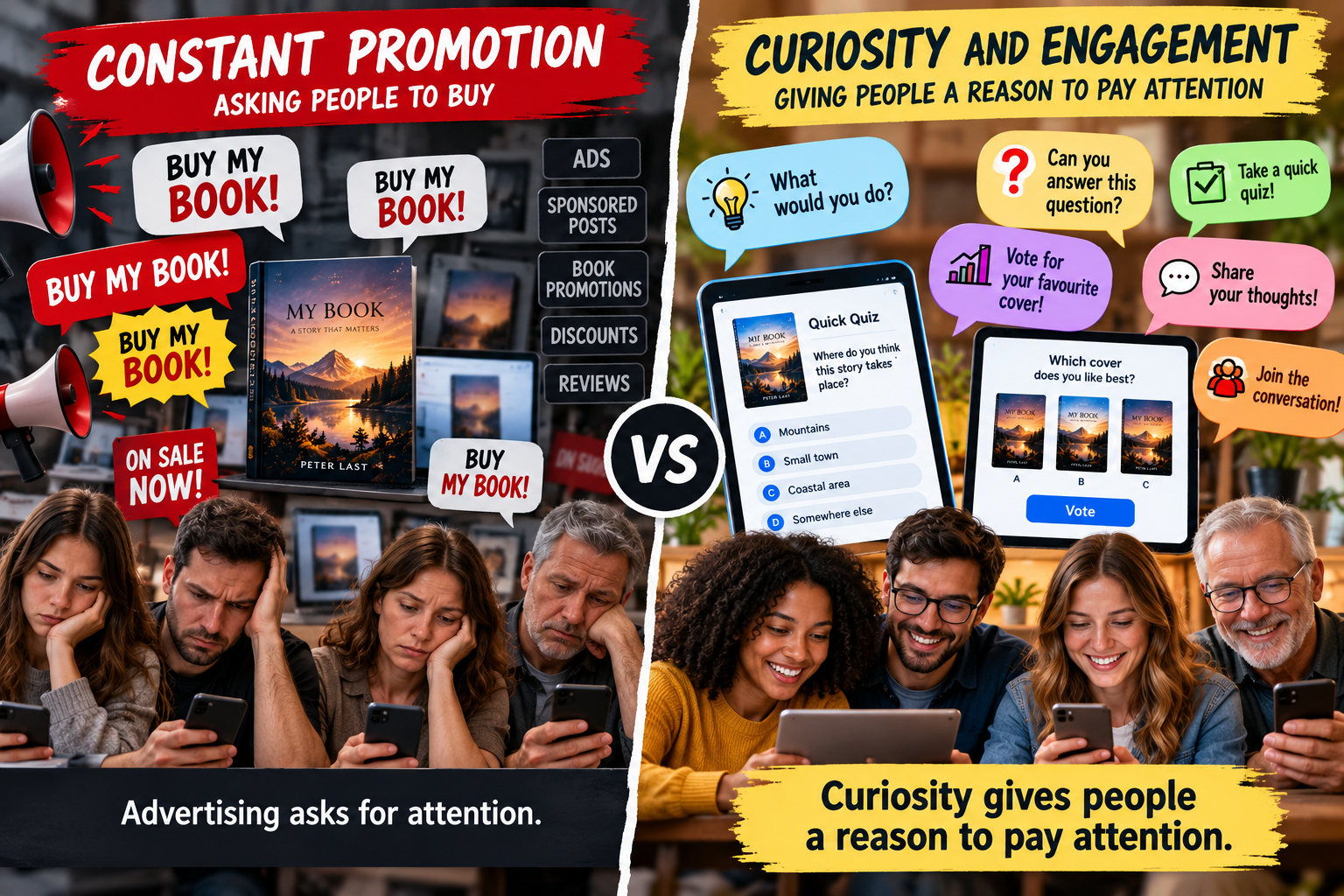
Stop Selling for a Minute
Look at the average author's social feed.
Book cover.
Quote from the book.
Another book cover.
Five-star review.
Another quote.
Another picture of the book.
Buy my book.
There's nothing wrong with promoting your work.
You've spent months or years creating it. You should talk about it.
But there's a difference between constantly promoting a product and creating a reason for someone to become interested in it.
That difference is curiosity.
People don't spend their day hoping another author will advertise to them.
But people are naturally curious.
We answer questions.
We take quizzes.
We give opinions.
We test ourselves.
We debate ideas.
We vote.
We share things that surprise us.
We want to know what happens next.
Maybe indie authors should use more of that.
What If We Marketed the Idea Before the Book?
Instead of beginning with:
How do I sell my book?
What happens if we begin with:
How do I make someone curious about what my book is about?
A mystery writer could test someone's powers of observation.
A romance author could ask readers what they would do in a character's situation.
A children's author could create a family challenge.
A health author could create a knowledge quiz.
A history author could ask readers to guess what happened next.
A business author could present a real-world problem and ask readers how they would solve it.
A novelist could let readers vote on cover concepts, characters or story-related questions.
Now the author isn't simply advertising.
They're creating participation.
And participation can lead to discovery.
That's What Sparked an Idea
As I've worked through these same challenges with my own books, I started asking a question:
Could there be a better way for indie authors to create curiosity around their work before asking someone to buy it?
That question led me to begin developing something called Curiosity Spark Factor.
The idea isn't to create another website filled with book advertisements.
There are already plenty of places to list books.
I want to explore something different.
A place where authors and readers can connect through curiosity.
Quizzes.
Challenges.
Questions.
Cover voting.
Book samples.
Conversations.
Small interactions that give someone a reason to stop and participate.
The book can still be there.
The purchase link can still be there.
But it doesn't have to be the first thing someone sees.
Discovery Before Selling
I believe this distinction matters.
Marketing doesn't always have to start by convincing someone to purchase something.
Sometimes the first objective is much smaller.
Get someone to stop.
Think.
Answer.
Laugh.
Learn.
Vote.
Participate.
Or wonder:
What's this about?
That's the spark.
Curiosity creates the reason to take the next step.
I'm Building This as an Indie Author Too
Curiosity Spark Factor is currently being developed.
I'm not building it because I've somehow solved every problem associated with indie publishing.
Quite the opposite.
I'm building it because I've experienced many of those problems myself.
I'm approaching it the same way I've approached much of my work with Common Sense Factor:
Build something useful.
Test it.
Ask questions.
Listen to people using it.
Improve it.
Then keep learning.
Because if we're going to build something for indie authors, it shouldn't be based entirely on what someone thinks authors need.
Authors should help shape it.
Are You an Indie Author?
I'd like to hear from you.
What's been the hardest part after publishing your book?
Getting discovered?
Marketing?
Social media?
Advertising costs?
Building an email list?
Finding readers?
Understanding Amazon?
Knowing what content to create?
Or simply figuring out what to do next?
I'm building Curiosity Spark Factor around a simple idea:
Give people a reason to become curious before giving them another reason to buy.
If that sounds like something you'd like to explore, join the early author list.
You'll hear about Curiosity Spark Factor as it develops and have an opportunity to help shape what we're building.
Because perhaps the next chapter in indie publishing isn't about finding another place to advertise our books.
Maybe it's about giving readers a better reason to discover them.
Are You an Indie Author?
If you're facing some of these same challenges, I'd like to hear from you.
Curiosity Spark Factor™ is being developed with indie authors in mind. Tell us what's challenging you, what you'd like help with, and help shape what we're building.
© 2026 CS Factor Holdings LLC. All rights reserved. Published by CS Factor Book Publishing Inc. under licence.


