AI Is a Tool. The Human Still Has to Know What to Do With It.
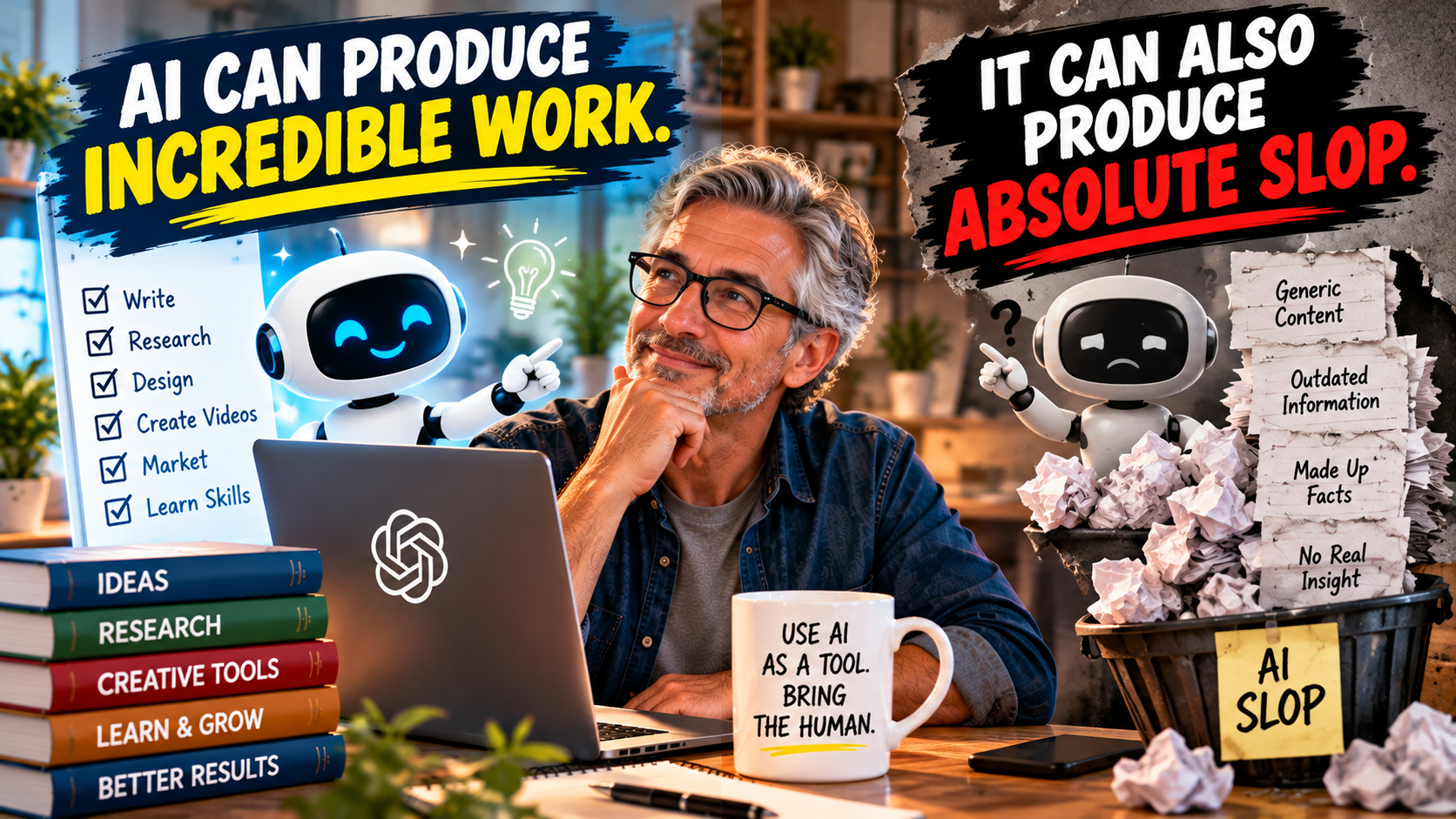
AI can produce incredible work.
It can also produce absolute slop.
And sometimes the difference has very little to do with the technology.
It comes down to the person using it.
I’ve spent much of my life working in and around the skilled trades. Walk onto a job site and you’ll see something that offers a pretty good lesson for the way we should be thinking about artificial intelligence.
You’ll see tools.
Lots of them.
A carpenter has saws, levels, drills, nailers and measuring tools. An electrician has meters, testers, strippers and specialized equipment. A plumber has wrenches, cutters, inspection equipment and tools designed for jobs most homeowners probably don't even know exist.
A mechanic has diagnostic equipment that can identify problems in minutes that once might have taken hours to track down.
Doctors have imaging equipment, laboratory testing and increasingly sophisticated diagnostic tools.
Accountants use software that can process numbers faster and more accurately than doing everything by hand.
Graphic designers use software that allows them to accomplish things that once required an entire production department.
Nobody looks at a carpenter using a power saw and says, “Well, you didn't really build that. The saw did.”
That would be ridiculous.
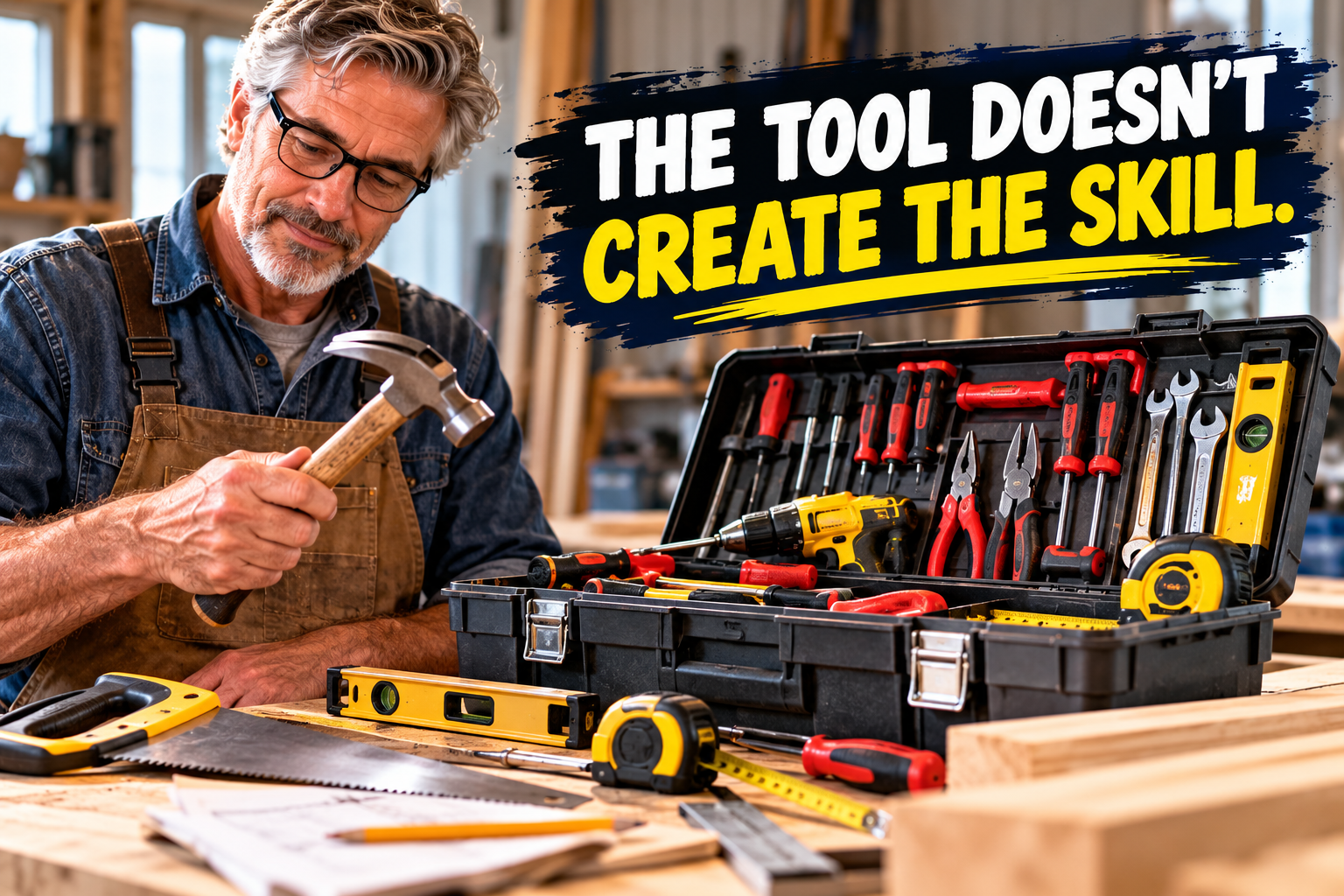
The saw is a tool.
The skill is knowing what to do with it.
And I think we need to start looking at AI the same way.
The Hammer Doesn't Make You a Carpenter
Give someone a $500 hammer and they don't suddenly become a carpenter.
Give them the best collection of tools money can buy and they still don't automatically know how to build a house.
They need knowledge.
They need experience.
They need to understand the materials they're working with. They need to know how things fit together. They need to recognize when something doesn't look right.
Most importantly, they need judgment.
AI isn't much different.
We are reaching a point where almost anyone can open an AI program and ask it to write an article, design an image, research a subject, create a marketing campaign or help develop a book.
That's remarkable.
But access to the tool isn't the same thing as mastery of the tool.
Ask AI to write something for you. Copy it. Paste it. Hit publish.
You might get something that looks impressive.
But read enough AI-generated material and you begin to recognize the problem.
Everything starts sounding the same.
Polished.
Predictable.
Generic.
AI slop.
The Problem Isn't Necessarily AI
I think we're making a mistake when we automatically blame AI for poor AI-generated content.
Sometimes the problem is how we're using it.
Imagine a tradesperson blaming a drill because the hole is in the wrong place.
The drill did exactly what it was asked to do.
Someone still had to measure.
Someone had to determine where the hole belonged.
Someone had to choose the right bit.
And someone had to recognize when they were about to drill straight through something they shouldn't.
The same principle applies to AI.
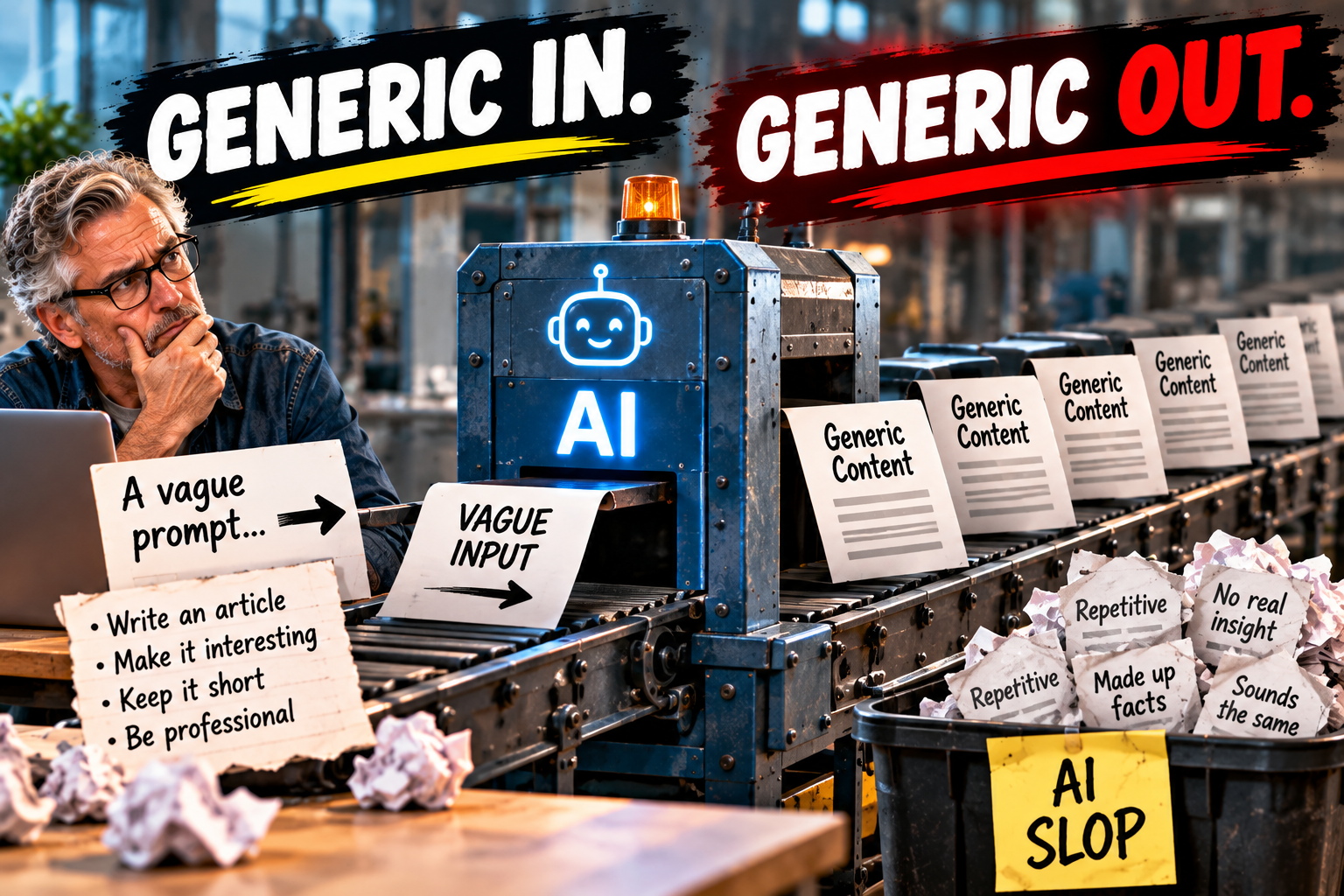
If you ask a vague question, accept the first answer and never challenge it, you're handing over the thinking.
That's very different from using AI to support your thinking.
Use AI to Learn
This is where I believe AI becomes genuinely exciting.
Someone who has never written a book can use AI to understand how books are structured.
Someone who has never created a video can learn about scripts, hooks, pacing and storyboards.
A small business owner can begin understanding marketing without having a marketing department.
Someone trying to understand a complicated subject can ask AI to explain it in simpler language, then ask follow-up questions until the concept starts making sense.
That's an extraordinary educational opportunity.
But there's an important distinction.
AI can help you understand something. That doesn't mean you should automatically believe everything it tells you.
Use it to learn.
Then use what you've learned to ask better questions.

Research. Then Verify.
AI can also be an excellent research assistant.
But an assistant isn't the final authority.
Ask for sources.
Read the sources.
Look at who published the information.
Check whether the research is current.
Compare different viewpoints.
Ask:
“What evidence supports this?”
Then ask another useful question:
“What evidence might contradict it?”
That second question matters.
If we're only asking AI to confirm what we already believe, we've created a very sophisticated agreement machine.
That's not learning.
That's confirmation.
Good research should occasionally make us uncomfortable because it forces us to reconsider something we thought we knew.
Bring Something AI Doesn't Have
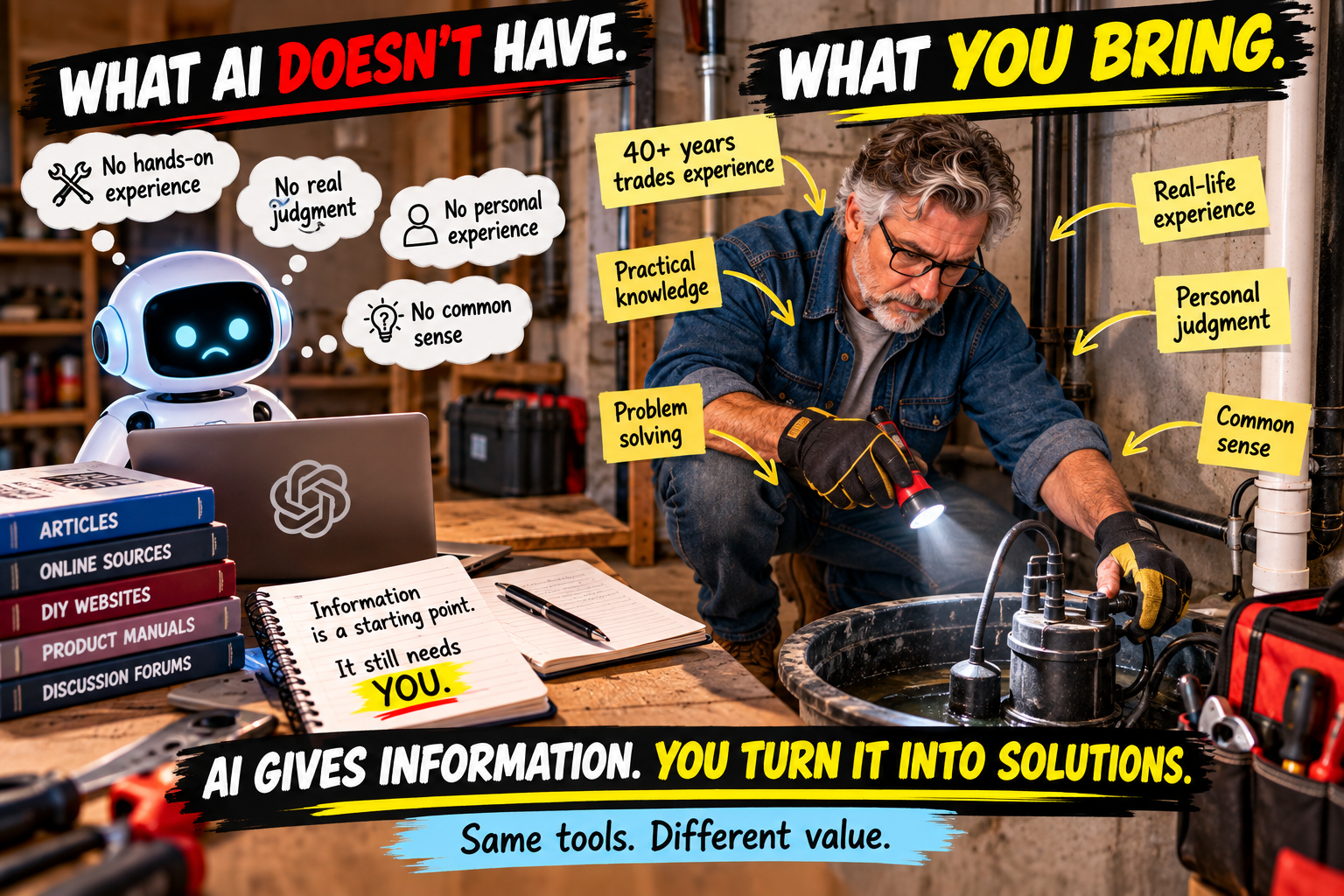
There is another part of this conversation that I don't think gets enough attention.
Your experience matters.
Your mistakes matter.
Your observations matter.
Your personality matters.
Your judgment matters.
If I write about home maintenance, I can bring decades of experience working with buildings, trades, maintenance and homeowners to the conversation.
AI can help me organize that information.
It can help me identify areas that need more research.
It can challenge a statement.
It can help simplify an explanation.
It can help me see repetition that I might have missed after reading the same chapter fifteen times.
That's useful.
But AI wasn't standing beside me when a sump pump failed.
It wasn't on the job site.
It hasn't watched a homeowner make an expensive decision because nobody explained the basics first.
That's the human part.
And when you combine human experience with technology intelligently, something interesting happens.
You can become capable of doing things that previously might have required several different people.
Your Toolbox Just Got Bigger
Think about what one person can potentially do today.
Write.
Research.
Design.
Create images.
Produce video.
Analyze information.
Build presentations.
Develop marketing materials.
Learn unfamiliar software.
Explore new subjects.
Twenty years ago, many of those activities required different specialists, expensive software or significant training before you could even begin.
AI lowers that barrier.
That doesn't mean expertise suddenly doesn't matter.
Quite the opposite.
As the tools become easier to access, judgment becomes more important.
Knowing what looks right.
Knowing what sounds wrong.
Knowing when something needs verification.
Knowing when the machine has produced something technically impressive but completely disconnected from the people you're trying to reach.
Those are human skills.
Don't Hand Over Your Thinking
This may be the biggest lesson.
Use AI.
Learn it.
Experiment with it.
Let it make you faster.
Let it expose you to skills you didn't have before.
Let it help you explore ideas you might never have considered.
But don't hand over your thinking.
A tradesperson doesn't throw away their knowledge because they bought a better tool.
They use the better tool with their knowledge.
That's how I believe we should approach artificial intelligence.
The technology will continue changing. The tools will become faster and more capable. Some of what seems extraordinary today will probably look ordinary within a few years.
But one principle shouldn't change.
The tool should expand what you're capable of doing, not replace your responsibility for what you create.
Research it.
Question it.
Verify it.
Then add your experience, judgment and personality.
Because AI doesn't replace authenticity.
Used properly, it can help you express it.


